
Table of Contents
ToggleDo I Have Strep Throat? Self Evaluation & Symptom Checker
A sore throat can be caused by several different conditions, including viral infections, allergies, or bacterial infections such as strep throat. Because symptoms can sometimes overlap, it may be difficult to determine whether a sore throat may be caused by group A Streptococcus bacteria.
This self-evaluation guide reviews common symptoms associated with strep throat and explains how doctors evaluate these symptoms during a medical exam. While this guide cannot diagnose an infection, it can help you understand whether testing or medical evaluation may be recommended.
If symptoms strongly suggest strep throat, a healthcare provider may perform a rapid strep test or throat culture to confirm the infection.
Watch: Dr. Richard Honaker Explains How Doctors Evaluate Strep Throat Symptoms
Although symptoms can provide important clues, Dr. Honaker emphasizes that visual examination alone cannot confirm strep throat. Doctors usually perform a rapid strep test or throat culture to detect the bacteria responsible for the infection and determine whether antibiotics may be needed.
How This Self Evaluation Works
Doctors often evaluate several symptoms together when determining whether a patient may have strep throat. This includes examining throat appearance, checking for fever, and asking questions about symptom onset.
The following sections walk through common symptoms that may suggest strep throat versus viral sore throat.
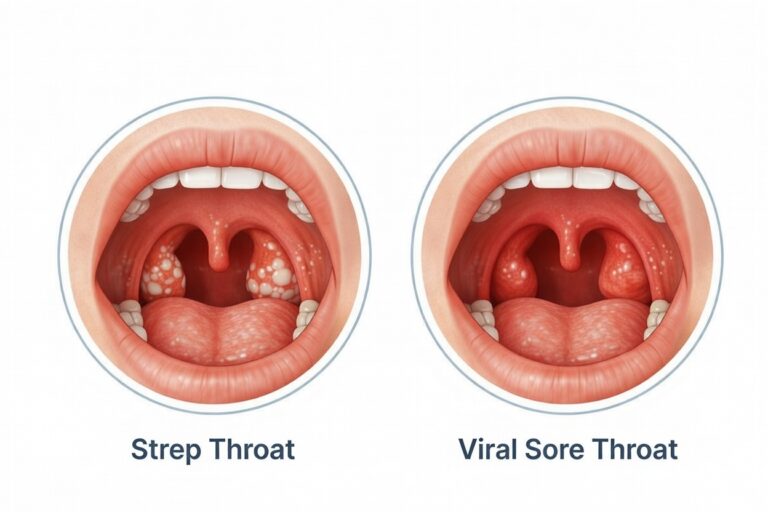
Step 1: Check Your Main Symptoms
Common Symptoms of Strep Throat
| Symptom | What It Means | Why It Happens |
|---|---|---|
| Sudden sore throat | Throat pain appears quickly | Infection causes inflammation in throat tissue |
| Fever above 101°F | Elevated body temperature | Immune system responds to bacterial infection |
| Pain when swallowing | Swallowing becomes uncomfortable | Inflamed throat tissues become sensitive |
| White patches on tonsils | White spots or streaks appear | Bacteria and immune cells collect on the tonsils |
| Red and swollen tonsils | Tonsils become enlarged and inflamed | Immune response causes swelling |
If several of these symptoms are present, doctors may consider testing for strep throat.
Step 2: Check for Viral Symptoms
Many sore throats are caused by viruses rather than bacteria. Viral sore throats usually include additional respiratory symptoms.
Symptoms That Suggest a Viral Infection
| Symptom | What It Means | Why It Happens |
|---|---|---|
| Cough | Frequent coughing | Viruses affect respiratory passages |
| Runny nose | Nasal discharge | Viral infections often affect nasal passages |
| Nasal congestion | Stuffy nose | Inflammation occurs in nasal tissues |
| Hoarse voice | Voice sounds raspy | Vocal cords become irritated |
| Gradual symptom onset | Symptoms develop slowly | Viral infections usually progress gradually |
If these symptoms are present, the sore throat may be more likely caused by a viral infection rather than strep throat.
Step 3: Look for Visible Signs in the Throat
Visual Signs Doctors Look For
| Symptom | What It Means | Why It Happens |
|---|---|---|
| Sudden sore throat | Throat pain appears quickly | Infection causes inflammation in throat tissue |
| Fever above 101°F | Elevated body temperature | Immune system responds to bacterial infection |
| Pain when swallowing | Swallowing becomes uncomfortable | Inflamed throat tissues become sensitive |
| White patches on tonsils | White spots or streaks appear | Bacteria and immune cells collect on the tonsils |
| Red and swollen tonsils | Tonsils become enlarged and inflamed | Immune response causes swelling |
If several of these symptoms are present, doctors may consider testing for strep throat.
Step 4: Review the Timing of Symptoms
The way symptoms begin can also help distinguish between viral and bacterial infections.
Symptom Onset Comparison
| Condition | Symptom Onset | Common Pattern |
|---|---|---|
| Strep throat | Sudden onset | Symptoms appear quickly and may worsen within 24–48 hours |
| Viral sore throat | Gradual onset | Symptoms slowly develop over several days |
Sudden severe symptoms often raise suspicion for strep throat, especially when accompanied by fever and swollen tonsils.
How Doctors Confirm Strep Throat
Even if symptoms strongly suggest strep throat, doctors usually confirm the infection using a medical test.
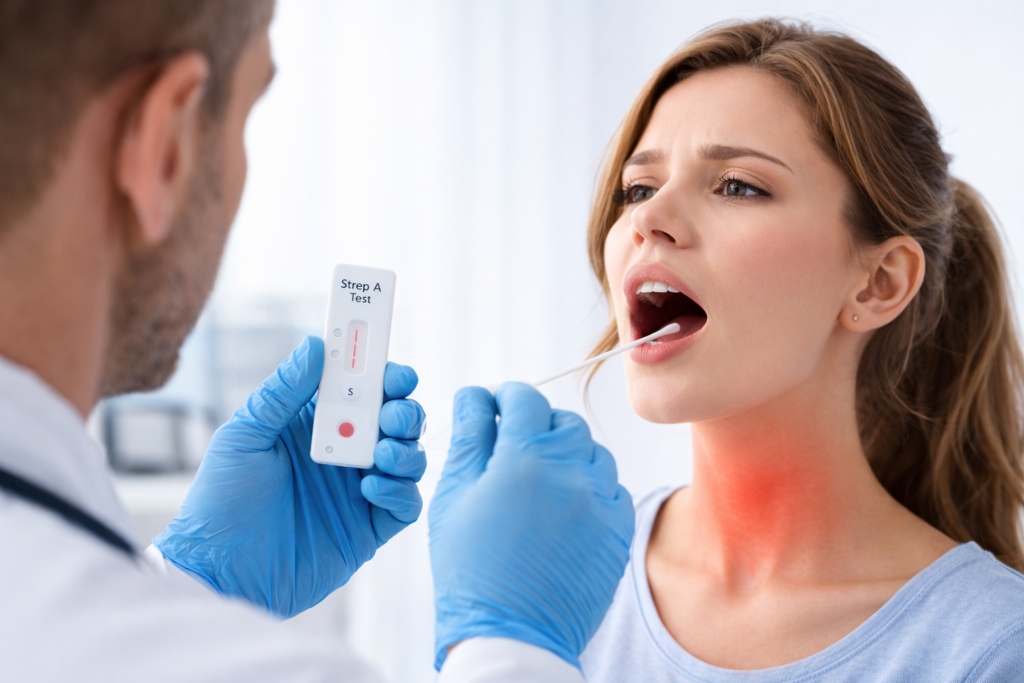
The most common diagnostic test is a rapid strep test.
During this test, a healthcare provider:
swabs the back of the throat
collects a sample of bacteria
tests the sample for group A streptococcus
Rapid tests can often provide results in less than 10 minutes.
If the rapid test is negative but symptoms strongly suggest infection, a throat culture may be performed.
Strep Throat Symptom Score Guide
Doctors sometimes use symptom scoring systems to determine whether testing for strep throat is recommended.
Symptom Evaluation Chart
| Symptom | Possible Score |
|---|---|
| Fever above 101°F | +1 |
| Swollen lymph nodes | +1 |
| White patches on tonsils | +1 |
| Absence of cough | +1 |
| Age under 15 | +1 |
Higher scores may increase the likelihood that testing for strep throat may be recommended.
However, medical testing is still required to confirm the infection.
When to Seek Medical Care
While many sore throats improve without treatment, certain symptoms may require medical evaluation.
Seek medical care if symptoms include:
severe throat pain
fever above 101°F
difficulty swallowing
swollen lymph nodes
white patches on the tonsils
symptoms lasting longer than several days
A healthcare provider can determine whether testing or treatment may be necessary.
What Happens If Strep Throat Is Confirmed
If testing confirms strep throat, doctors usually prescribe antibiotics to treat the infection.
Antibiotics help:
eliminate the bacteria causing the infection
reduce symptom duration
prevent complications
reduce contagiousness
Most patients begin to feel improvement within 24–48 hours after starting treatment.
It is important to complete the entire course of antibiotics even if symptoms improve early.
Is Strep Throat Contagious?
Yes. Strep throat spreads through respiratory droplets when infected individuals cough, sneeze, or share utensils.
Without treatment, someone with strep throat may remain contagious for several days.
After starting antibiotics, most people are no longer contagious within 24 hours.
Practicing good hygiene such as washing hands frequently and avoiding sharing drinks can help reduce the spread of infection.
Frequently Asked Questions
Can this self evaluation diagnose strep throat?
No. This guide is designed to help review symptoms, but medical testing is required to confirm the infection.
Can adults get strep throat?
Yes. Although strep throat is more common in children, adults can also develop the infection.
How long does strep throat last?
With treatment, symptoms often improve within 1–3 days, and the infection typically resolves within about a week.
Medical Disclaimer
The information provided on this self-evaluation page by Best Docs Network is intended for informational and educational purposes only and should not be considered medical advice, diagnosis, or treatment.
This self-assessment tool is designed to help you better understand potential symptoms and health concerns; however, it cannot replace the professional judgment of a qualified healthcare provider. Results from this evaluation are not a medical diagnosis and should not be used to make decisions about your health without consulting a licensed physician or other qualified healthcare professional.
If you are experiencing symptoms, discomfort, or health concerns, you should seek the advice of a medical professional for proper evaluation and care.
Never disregard professional medical advice or delay seeking treatment because of information obtained from this website, video content, or any self-evaluation tool provided by Best Docs Network.
If you believe you are experiencing a medical emergency, call 911 or seek immediate medical attention.
Use of this self-evaluation tool and the information on this website is at your own risk. Best Docs Network, its physicians, affiliates, contributors, and partners make no guarantees regarding the accuracy, completeness, or applicability of the information provided for individual circumstances.
By using this page, you acknowledge and agree that Best Docs Network is not responsible for any decisions or actions you take based on the information provided.