
Table of Contents
ToggleStrep Throat vs Viral Sore Throat: How to Tell the Difference
A sore throat is one of the most common symptoms people experience during respiratory infections. While many sore throats are caused by viruses, some are the result of a bacterial infection known as strep throat. Because the symptoms can sometimes overlap, it can be difficult to know whether a sore throat is viral or caused by group A Streptococcus bacteria.
Understanding the differences between strep throat and viral sore throat can help you recognize warning signs, understand when testing may be necessary, and know when medical treatment could be appropriate. Although both conditions affect the throat, they differ in their causes, symptom patterns, and treatment approaches.
Dr. Richard Honaker on Strep Throat
Dr. Honaker explains that bacterial strep infections tend to start quickly and feel more intense than viral sore throats.
Common signs he points out include:
Sudden throat pain
Difficulty swallowing
Fever
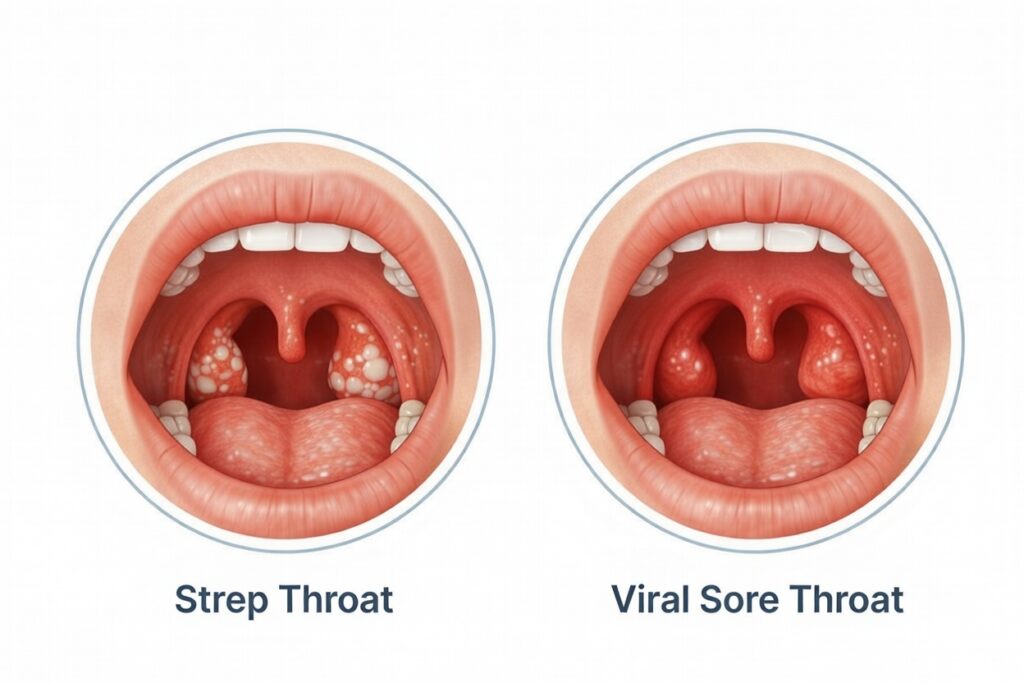
White or yellow patches on the tonsils
Swollen lymph nodes in the neck
What is Strep Throat?
Strep throat is a bacterial infection caused by group A Streptococcus bacteria. This type of infection commonly affects the throat and tonsils and can cause sudden, severe throat pain along with other symptoms such as fever and swollen lymph nodes.
Because strep throat is caused by bacteria, it is typically treated with antibiotics, which help clear the infection and prevent potential complications. These complications, although uncommon, may include conditions such as rheumatic fever or kidney inflammation if the infection goes untreated.
Strep throat is most common in school-aged children between 5 and 15 years old, but adults can also develop the infection. The bacteria spread through respiratory droplets when an infected person coughs, sneezes, or shares utensils.
Doctors often confirm the infection using a rapid strep test or throat culture, which detects the presence of the bacteria in the throat.
What Is a Viral Sore Throat?
A viral sore throat is caused by viruses that infect the respiratory system, including those responsible for the common cold, influenza, and other respiratory illnesses. Viral infections are actually the most common cause of sore throat symptoms.
Unlike bacterial infections, viral sore throats usually resolve on their own as the immune system clears the virus. Antibiotics do not treat viral infections, so treatment typically focuses on relieving symptoms while the body recovers.
Viral sore throats often occur alongside other respiratory symptoms such as coughing, congestion, and runny nose. These symptoms help doctors differentiate viral infections from bacterial infections like strep throat.
Most viral sore throats improve within three to seven days, although some viral illnesses may last slightly longer depending on the type of virus involved.
Key Symptoms That Suggest Strep Throat
Certain symptoms make a bacterial infection more likely than a viral illness. People experiencing the following symptoms may be more likely to have strep throat:
sudden fever above 101°F
severe throat pain
painful swallowing
white patches or streaks on the tonsils
red swollen tonsils
swollen lymph nodes in the neck
absence of cough
Doctors sometimes use clinical scoring systems to evaluate these symptoms and determine whether testing for strep throat may be necessary.
However, symptoms alone cannot confirm the infection, which is why diagnostic testing is often recommended when strep throat is suspected.


Symptoms More Common With Viral Sore Throat
Viral infections often affect the entire respiratory system, which means additional symptoms may appear alongside throat pain.
Common symptoms associated with viral sore throat include:
cough
runny nose
nasal congestion
hoarse voice
mild throat irritation
gradual symptom onset
fatigue or body aches
When these symptoms occur together, doctors are more likely to suspect a viral infection rather than strep throat.
Because viral infections typically improve without antibiotics, treatment usually focuses on rest, hydration, and symptom relief.
Strep Throat vs Viral Sore Throat Symptoms
| Symptom | Strep Throat | Viral Sore Throat |
|---|---|---|
| Fever | Common (often 101°F+) | Less common |
| White patches on tonsils | Common | Rare |
| Runny nose | Rare | Common |
| Cough | Usually absent | Common |
| Swollen lymph nodes | Common | Sometimes |
| Symptom onset | Sudden | Gradual |
When Should You Get Tested for Strep Throat?
Testing may be recommended when symptoms strongly suggest a bacterial infection rather than a viral illness.
A healthcare provider may consider testing if the following symptoms are present:
sudden fever
severe throat pain
white patches on the tonsils
swollen lymph nodes
absence of cough
Doctors commonly use a rapid strep test, which involves swabbing the throat to detect the presence of group A Streptococcus bacteria. Results are often available within minutes.
If the rapid test is negative but symptoms strongly suggest infection, a throat culture may be performed to confirm the diagnosis.
Testing helps ensure that antibiotics are only used when a bacterial infection is present.
Can Viral Sore Throat Turn Into Strep?
A viral sore throat does not actually transform into strep throat, because the two conditions are caused by different types of organisms. However, it is possible for someone to develop a secondary bacterial infection after initially having a viral illness.
For example, a person may first experience cold symptoms and later develop new symptoms such as severe throat pain or fever. In these situations, a healthcare provider may recommend evaluation and testing.
If symptoms worsen, persist beyond several days, or suddenly change, medical evaluation may help determine whether a bacterial infection has developed.
What to Do If You Think You Have Strep Throat
If symptoms suggest strep throat, medical evaluation may help confirm the diagnosis.
Possible next steps include:
Visiting a healthcare provider
Using an at-home test kit
Scheduling an online telehealth consultation
If strep throat is confirmed, antibiotics are usually prescribed to treat the infection and reduce the risk of complications.
How Doctors Diagnose Strep Throat
Doctors diagnose strep throat using laboratory tests that detect the bacteria responsible for the infection.
The most common test is the rapid strep test, which involves swabbing the throat and testing the sample for group A streptococcus bacteria. This test typically provides results within a few minutes.
If the rapid test is negative but symptoms strongly suggest infection, doctors may perform a throat culture, which allows bacteria to grow in a laboratory setting. Although this test takes longer to produce results, it is considered highly accurate.
Accurate diagnosis is important because antibiotics are only effective against bacterial infections, not viral illnesses.
What to Do If You Think You Have Strep Throat
If symptoms suggest strep throat, a healthcare provider can help determine whether testing or treatment may be needed.
Possible next steps include:
visiting a primary care provider
scheduling an online telehealth consultation
using an at-home testing kit
monitoring symptoms for changes
If strep throat is confirmed, doctors usually prescribe antibiotics, which help clear the infection and reduce the risk of complications.
People diagnosed with strep throat are often advised to stay home from work or school until they have taken antibiotics for at least 24 hours, since the infection can spread to others.
Preventing the Spread of Strep Throat
Because strep throat spreads through respiratory droplets, certain precautions may help reduce the risk of infection.
Helpful prevention measures include:
washing hands frequently
avoiding sharing utensils or drinking glasses
covering coughs and sneezes
disinfecting commonly touched surfaces
avoiding close contact with infected individuals
These steps can help limit the spread of bacteria within households, schools, and workplaces.
Frequently Asked Questions
Can a sore throat be strep without fever?
While fever is common with strep throat, it is possible to have strep throat without a high fever. A healthcare provider may perform a test if symptoms strongly suggest a bacterial infection.
How long does viral sore throat last?
Most viral sore throats improve within 3–7 days as the immune system clears the infection.
Is strep throat contagious?
Yes. Strep throat spreads through respiratory droplets and close contact with infected individuals.
Can adults get strep throat?
Yes. While the infection is more common in children, adults can still develop strep throat.
When to Seek Medical Care
While many sore throats improve without treatment, medical evaluation may be recommended if symptoms include:
high fever
severe throat pain
difficulty swallowing
swollen lymph nodes
white patches on the tonsils
symptoms lasting longer than several days
A healthcare provider can determine whether testing or treatment may be necessary.