
Strep Throat Treatment: 7 Fast Ways Doctors Treat the Infection
Table of Contents
Strep Throat Treatment: How Doctors Treat and Manage the Infection
Strep throat is a bacterial infection caused by group A Streptococcus bacteria. Unlike most sore throats, which are caused by viruses, strep throat typically requires medical treatment to clear the infection and reduce the risk of complications.
Treatment usually involves antibiotics prescribed by a healthcare provider, along with supportive care to relieve symptoms such as throat pain, fever, and difficulty swallowing. When treated properly, most people begin to feel better within a few days.
Understanding how strep throat is treated can help you know what to expect during recovery and when it may be appropriate to seek medical care.

Watch: How Doctors Treat Strep Throat
In this video, Dr. Richard Honaker explains how doctors diagnose and treat strep throat. Because strep throat is caused by group A Streptococcus bacteria, treatment typically involves antibiotics once the infection is confirmed with a rapid strep test or throat culture.
How Strep Throat Is Treated
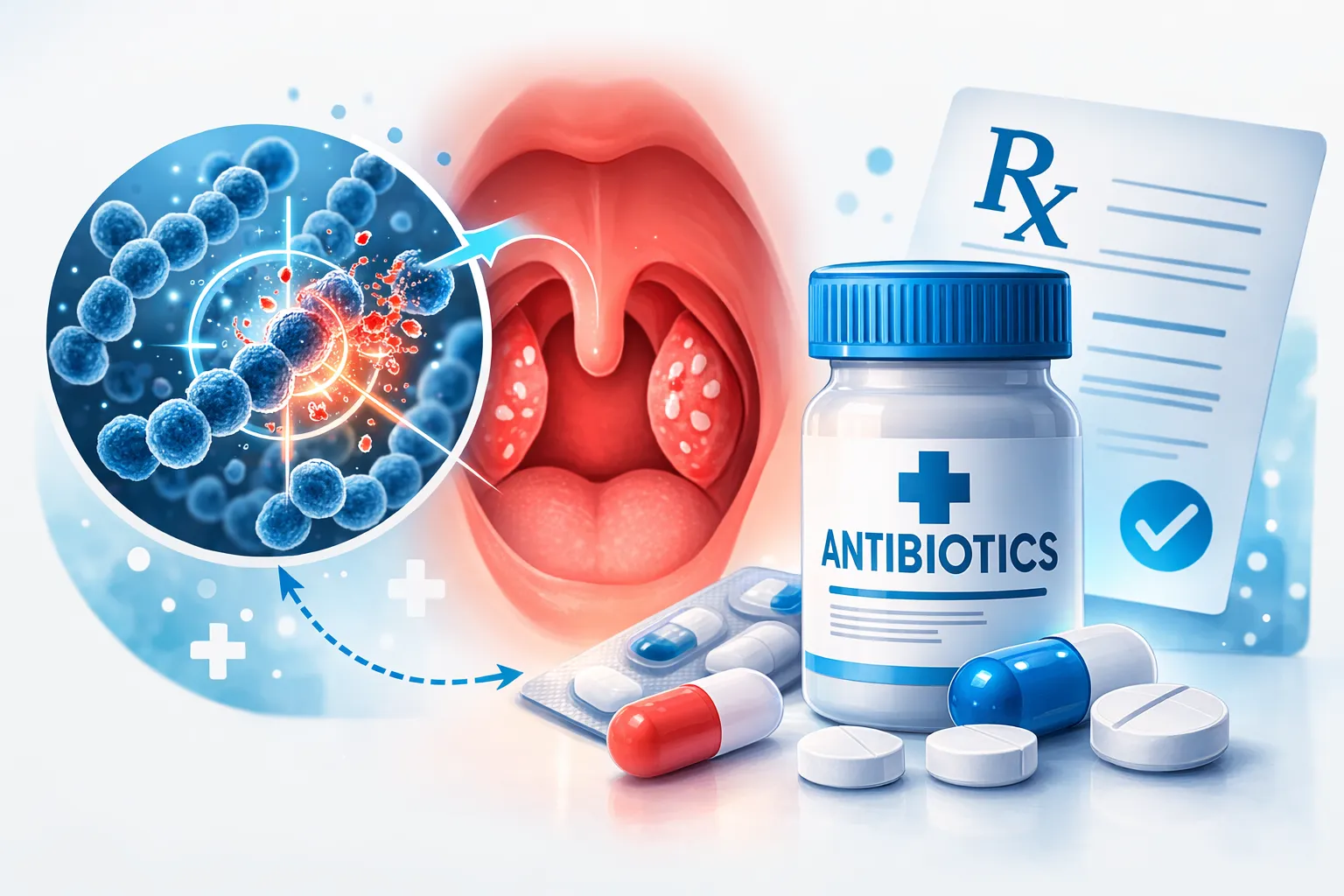
The primary treatment for strep throat is antibiotic medication, which targets the bacteria responsible for the infection. Antibiotics help eliminate the bacteria, reduce the duration of symptoms, and prevent potential complications.
Doctors typically prescribe antibiotics after confirming the infection using a rapid strep test or throat culture.
Common antibiotics used to treat strep throat include:
- penicillin
- amoxicillin
- cephalexin
- azithromycin (for people allergic to penicillin)
Most treatment courses last about 10 days, although some antibiotics may be prescribed for shorter periods depending on the medication.
Patients usually begin to feel improvement within 24 to 48 hours after starting antibiotics.
Why Antibiotics Are Important
Antibiotics play several important roles in treating strep throat:
Clearing the infection
Antibiotics eliminate the bacteria causing the infection.
Reducing symptom duration
Treatment often helps symptoms improve more quickly.
Preventing complications
Untreated strep throat can sometimes lead to complications such as rheumatic fever or kidney inflammation.
Reducing contagiousness
After 12 hours of antibiotics, people are much less likely to spread strep (CDC).
Because of these benefits, doctors generally recommend antibiotic treatment once strep throat is confirmed.
How Long Does Strep Throat Last With Treatment?
When treated with antibiotics, most people notice significant improvement within one to three days.
Typical recovery timeline:
- First 24 hours: fever and severe symptoms may begin improving
- 24–48 hours: throat pain often starts to decrease
- 3–5 days: most symptoms significantly improve
- 7–10 days: infection is fully cleared with completion of antibiotics
Even if symptoms improve quickly, it is important to complete the entire course of antibiotics to ensure the infection is fully treated.
Home Care for Strep Throat Symptoms
While antibiotics treat the infection itself, supportive care can help reduce discomfort during recovery.
Common home care strategies include:
Rest
Getting enough rest allows the immune system to focus on fighting the infection.
Hydration
Drinking plenty of fluids helps keep the throat moist and prevents dehydration.
Warm liquids
Warm beverages such as tea or broth may soothe throat irritation.
Pain relievers
Over-the-counter medications such as acetaminophen or ibuprofen can help reduce fever and throat pain.
Saltwater gargles
Gargling with warm saltwater may temporarily relieve throat discomfort.
These supportive treatments help manage symptoms while antibiotics clear the infection.
How Contagious Is Strep Throat?
Strep throat spreads through respiratory droplets, which can be transmitted when an infected person coughs, sneezes, or shares utensils.
Without treatment, someone with strep throat may remain contagious for several days.
However, after starting antibiotics:
- after 12 hours, people are much less likely to spread strep
- symptoms often begin improving shortly afterward
To help prevent spreading the infection, the CDC and the American Academy of Pediatrics advise staying home from work, school or child care until there is no fever and at least 12 hours of antibiotics have been taken (CDC, AAP). Some schools, employers or clinicians ask for a full 24 hours, so check their rules.

Can Strep Throat Go Away Without Antibiotics?
In some cases, strep throat may eventually improve without antibiotics as the immune system clears the infection. However, untreated strep throat can increase the risk of complications and may remain contagious for longer.
For this reason, doctors usually recommend antibiotic treatment when strep throat is confirmed.
Prompt treatment helps reduce symptoms, shorten recovery time, and prevent complications.
Possible Complications of Untreated Strep Throat
Although complications are uncommon, untreated strep throat can occasionally lead to more serious conditions.
Possible complications include:
- rheumatic fever
- kidney inflammation (post-streptococcal glomerulonephritis)
- ear infections
- sinus infections
- abscess near the tonsils
These complications are one reason doctors recommend testing and treatment when symptoms strongly suggest strep throat.
When to See a Doctor for Strep Throat
Medical evaluation may be recommended if symptoms include:
- severe throat pain
- fever above 101°F
- difficulty swallowing
- swollen lymph nodes
- white patches on the tonsils
- symptoms lasting longer than several days
Because many sore throats are viral, testing helps determine whether antibiotic treatment is necessary.
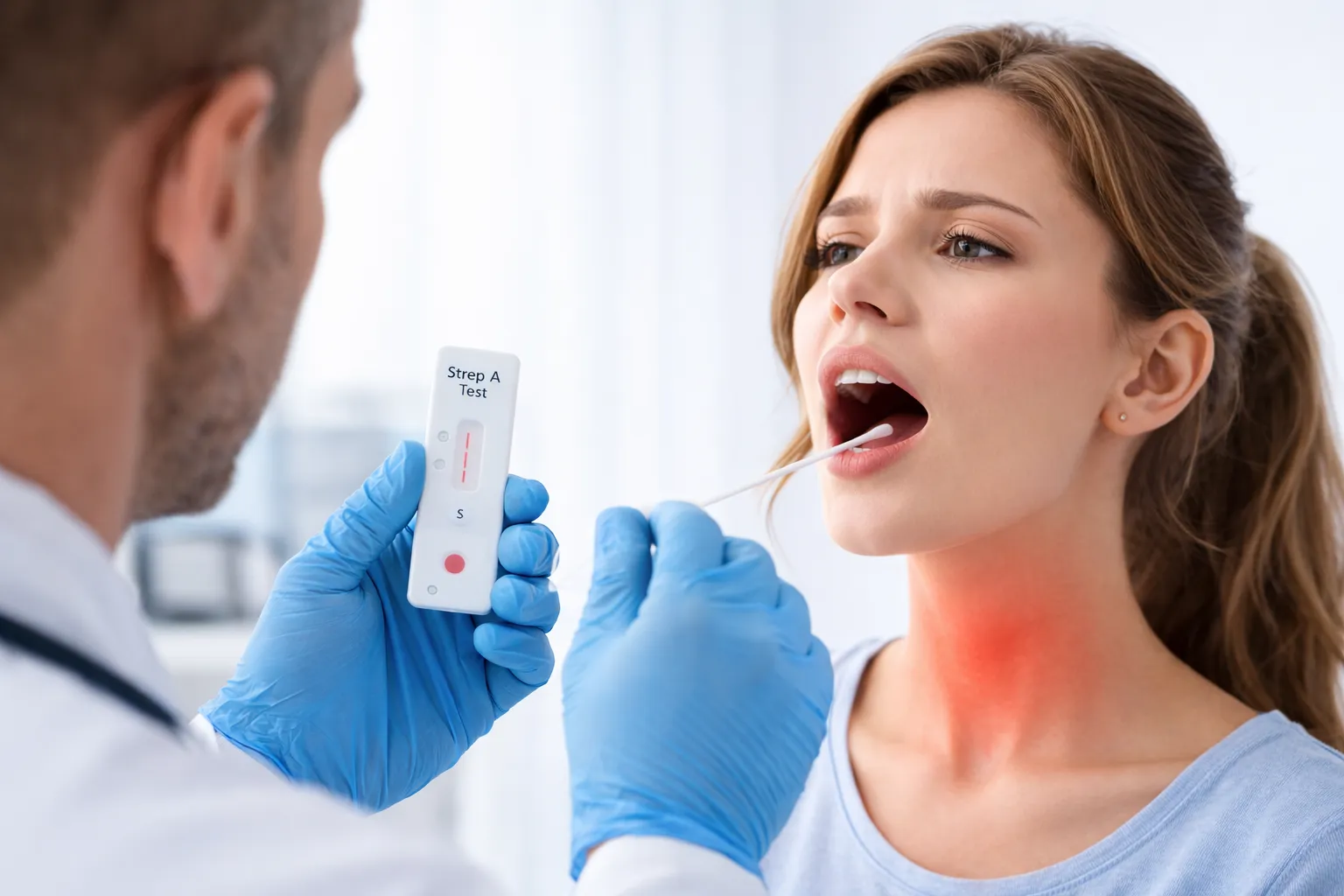
Doctors typically perform a rapid strep test to confirm the infection before prescribing antibiotics.
Preventing Strep Throat
While it is not always possible to prevent infection, certain precautions can reduce the risk of spreading bacteria.
Helpful prevention strategies include:
- washing hands frequently
- avoiding sharing utensils or drinking glasses
- covering coughs and sneezes
- disinfecting frequently touched surfaces
- staying home when sick
These steps can help limit the spread of respiratory infections in households, schools, and workplaces.
Frequently Asked Questions
How quickly do antibiotics work for strep throat?
Most people begin to feel improvement within 24 to 48 hours after starting antibiotics.
Can adults get strep throat?
Yes. Although strep throat is more common in children, adults can also develop the infection.
When can you return to school or work after strep throat?
Once there is no fever and at least 12 hours of antibiotics have been taken, according to the CDC and the American Academy of Pediatrics (CDC, AAP). Some schools, employers or clinicians ask for a full 24 hours, so check their rules.
Is strep throat contagious before symptoms appear?
Yes. Strep throat can sometimes spread before symptoms are fully noticeable.
How Long Does Strep Throat Last With Treatment?
| Treatment | Purpose | Examples |
|---|---|---|
| Antibiotics | Eliminate the bacteria causing strep throat | Penicillin, Amoxicillin, Azithromycin |
| Pain Relievers | Reduce fever and throat pain | Ibuprofen, Acetaminophen |
| Hydration | Prevent dehydration and soothe the throat | Water, warm tea, broth |
| Saltwater Gargles | Temporarily relieve throat irritation | Warm saltwater gargle |
| Rest | Support immune system recovery | Adequate sleep and reduced activity |
More About Strep Throat Treatment
Strep throat is a bacterial infection that often causes significant throat pain and fever. When strep is confirmed, treatment typically includes antibiotics plus supportive care to ease symptoms and help prevent complications.
This guide is educational and not medical advice.
Treatment Overview
Many sore throats are viral and improve without antibiotics. Strep throat, however, is caused by group A Streptococcus bacteria. Because antibiotics target bacteria, clinicians commonly recommend antibiotics when strep is confirmed or strongly suspected.
Most strep throat treatment plans combine:
- Antibiotics (when bacterial strep is diagnosed)
- Symptom relief (pain/fever control, hydration, rest)
- Guidance on isolation and return to normal activities
How Antibiotics Help
If strep throat is confirmed, antibiotics can:
- Eliminate the bacteria causing the infection
- Shorten the duration of symptoms for many people
- Reduce the risk of complications (some of which are serious but uncommon)
- Reduce contagiousness (after about 12 hours of treatment, people are much less likely to spread strep)
Common antibiotics used for strep throat may include:
- Penicillin
- Amoxicillin
- Cephalexin (for some people who cannot take penicillin)
- Azithromycin or clarithromycin (for certain penicillin allergies)
Your clinician will choose the best medication based on age, allergies, and medical history.
How Long Treatment Typically Takes
Strep throat antibiotic courses are often around 10 days, but the exact duration depends on the medication.
What many people notice:
- First day: fever and severe symptoms may start improving
- 24 to 48 hours: throat pain often begins to ease
- Several days: many symptoms significantly improve
- End of course: infection is treated more completely when the full prescription is finished
Even if you feel better early, you should generally complete the full course as prescribed.
Supportive Home Care
Antibiotics treat the infection, but supportive care helps reduce discomfort while your body recovers.
Practical home care options that may help include:
Hydration
- Drink water, warm tea, or broth.
- Take small sips if swallowing is painful.
Warm liquids and gargles
- Warm saltwater gargles can temporarily soothe throat irritation.
Pain and fever relief
- Over-the-counter options such as acetaminophen or ibuprofen may help if appropriate for you.
Rest
- Give your body time to recover with sleep and reduced activity.
Comfort measures
- Throat lozenges (if age-appropriate)
- Humidified air or warm showers to ease irritation
If your symptoms are severe or you have trouble swallowing fluids, seek medical care promptly.
Contagiousness After Treatment Starts
Strep throat spreads through respiratory droplets (coughing, sneezing, close contact). Without treatment, people may remain contagious for several days.
After 12 hours of antibiotics, people are much less likely to spread strep (CDC).
General guidance many clinicians use:
- Stay home from work, school or child care until there is no fever and at least 12 hours of antibiotics have been taken (CDC, AAP)
- Return only if symptoms are improving and you can participate comfortably
For more detail on timelines, see: http://strepcareguide.com/how-long-is-strep-throat-contagious/
What Happens If You Do Not Treat
Untreated strep throat can sometimes lead to complications. While complications are not the most common outcome, they are a key reason clinicians recommend testing and treatment when strep is confirmed.
Possible complications can include:
- Rheumatic fever
- Kidney inflammation after strep infection
- Ear and sinus infections
- Abscess formation near the tonsils
If you are deciding whether to pursue testing or treatment, consider discussing your risks and options with a healthcare provider.
When to Seek Medical Care
Get medical help if you have:
- Severe throat pain that makes swallowing difficult
- High fever that does not improve
- Symptoms that worsen rapidly
- Symptoms that do not improve after starting treatment
- Concerns about dehydration (for example, very low fluid intake)
Seek urgent care for red flags such as trouble breathing or swallowing, drooling, or rapidly worsening one-sided throat pain.
What to Do Next
Use the closest next-step pages depending on where you are in the process:
- If you want a detailed view of the medication role: http://strepcareguide.com/antibiotics-for-strep-throat/
- If you are still unsure whether your symptoms point to strep: http://strepcareguide.com/strep-throat-self-evaluation/
- If you want home-care strategies that can reduce pain while you recover: http://strepcareguide.com/best-home-remedies-for-strep-throat/
- If you are wondering about risks of skipping treatment: https://strepcareguide.com/what-happens-if-you-dont-treat-strep-throat-2/
When in doubt, testing can clarify whether antibiotics are appropriate.
More Questions
How quickly do people feel better after starting antibiotics?
Many people notice improvement within 24 to 48 hours, but timelines vary by person and by how quickly treatment starts.
Are antibiotics always necessary for strep throat?
If strep throat is confirmed or strongly suspected by a clinician, antibiotics are commonly recommended because they treat bacterial infection and reduce complications.
How long does the antibiotic course usually last?
Many courses are around 10 days, but some prescriptions can vary depending on the specific antibiotic and clinical judgement.
What can I use to relieve throat pain at home?
Supportive care may include hydration, warm liquids, saltwater gargles, rest, and over-the-counter pain relievers if appropriate.
Can strep throat get better without treatment?
In some cases symptoms may improve, but untreated strep can remain contagious longer and can increase the risk of complications. Testing and clinician guidance matter.
When can I return to work or school?
When there is no fever and at least 12 hours of antibiotics have been taken (CDC, AAP). Some schools, employers or clinicians ask for a full 24 hours, so check their rules.