
Strep Throat Symptoms: 9 Warning Signs You Shouldn’t Ignore
Table of Contents
Strep Throat Symptoms: How to Recognize the Signs of Infection
Learn the most common strep throat symptoms, how they differ from a viral sore throat, and when it’s important to see a doctor for testing and treatment.

What Is Strep Throat?
Strep throat is an infection caused by group A Streptococcus bacteria, which inflames the throat and tonsils. The infection spreads through respiratory droplets when someone coughs, sneezes, or shares drinks or utensils.
Strep throat is most common in school-aged children, but adults can also develop the infection.
Unlike viral sore throats, strep throat typically develops quickly and with more severe symptoms, including fever and swollen lymph nodes.
Doctors usually confirm the infection using a rapid strep test or throat culture.
10 Signs of Strep Throat
Recognizing the warning signs of strep throat can help you determine when to seek medical care.
1. Sudden Severe Sore Throat
One of the most noticeable symptoms is rapid onset throat pain. The discomfort may make swallowing food or liquids painful.
2. Pain When Swallowing
Swallowing can become difficult because of inflammation in the throat and tonsils.
3. Fever
A fever above 101°F (38.3°C) is common with bacterial infections like strep throat.
4. Red and Swollen Tonsils
The tonsils often become visibly inflamed and enlarged.
5. White Patches on the Tonsils
White or yellowish patches may appear on the tonsils due to bacterial infection.
6. Swollen Neck Lymph Nodes
Tender lumps may develop along the sides of the neck as the immune system responds to infection.
7. Tiny Red Spots on the Roof of the Mouth
Small red spots called petechiae sometimes appear near the back of the roof of the mouth.
8. Headache
Many people experience headaches during the early stages of the infection.
9. Fatigue or Malaise
You may feel unusually tired or weak while your body fights the infection.
10. Loss of Appetite
Painful swallowing often causes reduced appetite.
Common Strep Throat Symptoms
- Severe sore throat
- Pain when swallowing
- Fever above 101°F (38.3°C)
- Red and swollen tonsils
- White patches or streaks of pus on the tonsils
- Tiny red spots on the roof of the mouth
- Swollen lymph nodes in the neck
- Headache
- Fatigue
- Loss of appetite
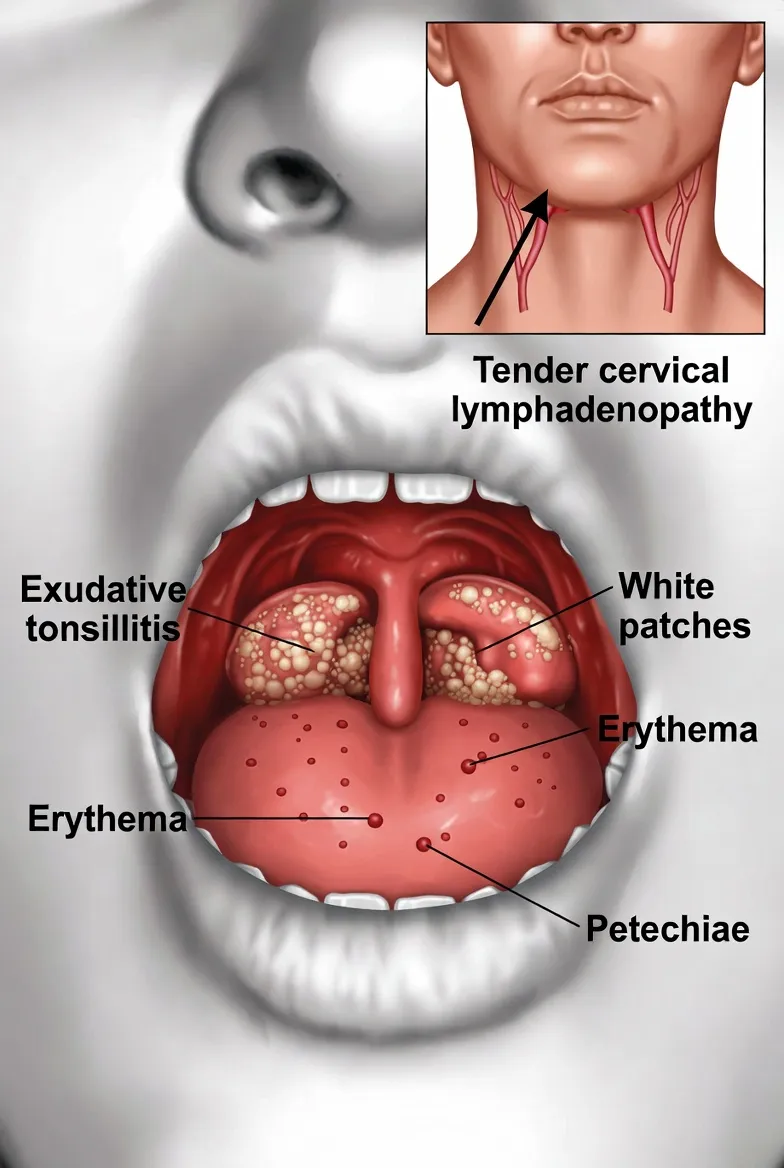
What Does Strep Throat Look Like?
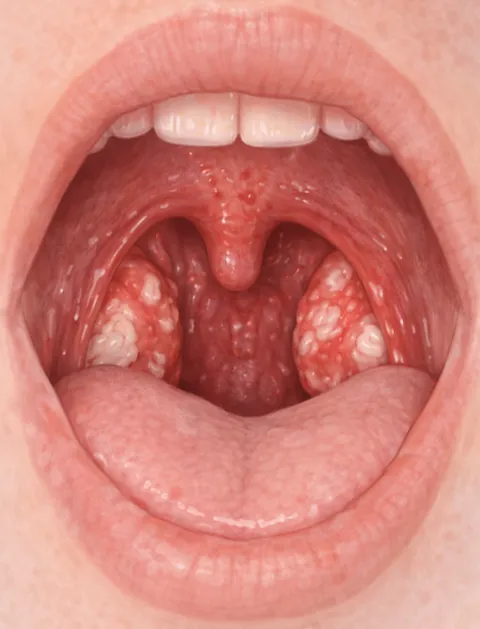
Common visual signs include:
- Red inflamed throat
- Enlarged tonsils
- White patches or streaks on the tonsils
- Red spots on the roof of the mouth
- Swollen lymph nodes in the neck
- Strep throat often causes visible changes in the throat and tonsils.
These signs help doctors identify whether a sore throat might be bacterial rather than viral.
Strep Throat vs Viral Sore Throat Symptoms
Many sore throats are caused by viruses rather than bacteria. Understanding the difference can help you determine when medical testing may be necessary.
| Symptom | Strep Throat | Viral Sore Throat |
|---|---|---|
| Fever | Common | Sometimes |
| Cough | Rare | Common |
| White tonsil patches | Common | Rare |
| Runny nose | Rare | Common |
| Antibiotics needed | Yes | No |
Viral infections usually improve on their own, while strep throat requires antibiotics to prevent complications.
When to See a Doctor
You should consider seeing a doctor if you experience:
- Fever higher than 101°F
- Severe throat pain
- Difficulty swallowing
- Swollen lymph nodes in the neck
- White patches on the tonsils
- Symptoms lasting longer than 48 hours
Doctors can perform a rapid strep test to determine whether the infection is bacterial.
Early diagnosis helps ensure proper treatment and prevents complications.
How Doctors Diagnose Strep Throat
To confirm strep throat, doctors usually perform one of two tests:
Rapid Strep Test
A swab of the throat is used to detect streptococcus bacteria. Results are usually available within minutes.
Throat Culture
If the rapid test is negative but symptoms strongly suggest strep throat, a throat culture may be sent to a laboratory for confirmation.
Accurate diagnosis helps ensure that antibiotics are used only when necessary.
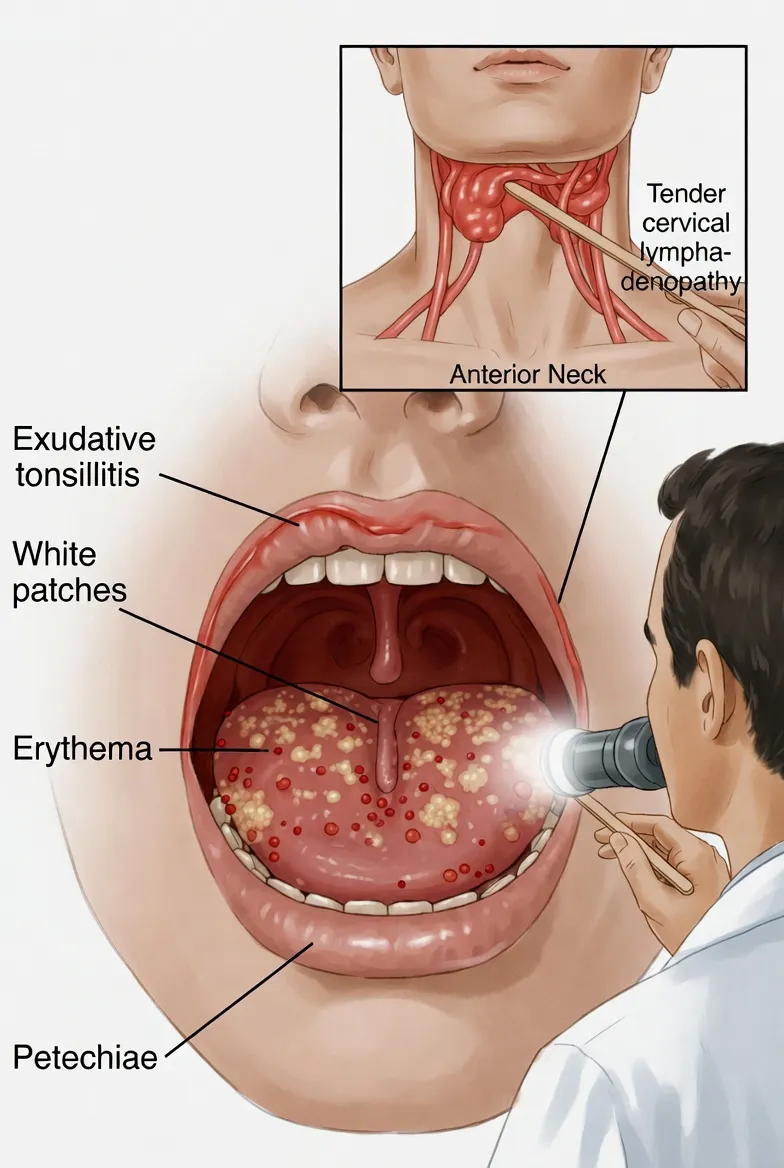
How Strep Throat Is Treated
Strep throat is typically treated with antibiotics, which help eliminate the bacteria and reduce the risk of complications.

Treatment usually includes:
- Antibiotic medication
- Pain relievers such as acetaminophen or ibuprofen
- Drinking plenty of fluids
- Rest
- Warm saltwater gargles
Most people begin to feel better within 24 to 48 hours after starting antibiotics.
More About Strep Throat Symptoms
Strep throat is a bacterial infection that can cause sudden, painful throat symptoms and visible changes in the tonsils. This guide explains the most common strep throat symptoms, how doctors evaluate them, and when medical care or testing is recommended.
This information is educational and is not a diagnosis.
How to Recognize Strep Throat Symptoms
Some sore throats are caused by viruses, while others are caused by bacteria such as group A Streptococcus. Strep throat often feels more intense than a typical viral sore throat and can come on quickly.
Because symptoms overlap, even strong symptoms cannot confirm strep on their own. Doctors usually recommend testing when the symptom pattern makes strep more likely.
9 Common Strep Throat Symptoms
The following symptoms are often associated with strep throat. Having one symptom does not automatically mean strep, but a cluster of these signs can raise suspicion and may be a reason to seek evaluation.
- Sudden, severe sore throat
- Throat pain may develop quickly and be painful to swallow.
- Pain when swallowing (odynophagia)
- Inflammation in the throat and tonsils can make swallowing uncomfortable.
- Fever (often 101F or higher)
- Fever is more typical with bacterial infections, though some people may not have a high temperature.
- Red and swollen tonsils
- Tonsils may look enlarged and inflamed.
- White patches or streaks on the tonsils
- White or yellowish areas can appear on the tonsil surface.
- Swollen, tender lymph nodes in the neck
- You might notice lumps along the front or sides of the neck that feel sore.
- Tiny red spots on the roof of the mouth (petechiae)
- These can be a helpful visual clue in some cases.
- Headache
- Head pain is common during infections that trigger inflammation and fever.
- Fatigue or reduced appetite
- Pain and fever can make people feel tired and may reduce how much they want to eat.
Tip: If you suspect strep, consider whether you also have symptoms that suggest a viral illness (such as cough and runny nose). This helps guide whether testing is appropriate.
What Strep Throat Looks Like
During an exam, clinicians may look for visible signs in the throat and tonsils. While appearance alone cannot confirm strep, certain patterns can make strep more likely.
Common visual signs include:
- Red, inflamed tonsils
- White patches or streaks on the tonsils
- Redness in the back of the throat
- Small red spots on the palate (petechiae)
- Swollen lymph nodes in the neck
If you want a deeper look at what doctors watch for, see: http://strepcareguide.com/what-does-strep-throat-look-like/
Strep Throat vs Viral Sore Throat
It can be hard to tell strep and viral sore throats apart just by feeling symptoms. Still, there are patterns that clinicians often use when deciding whether to test.
Clues that may suggest strep throat:
- Fever
- Sudden onset of severe throat pain
- Swollen lymph nodes
- White patches on the tonsils
- Absence of cough
Clues that may suggest viral sore throat:
- Cough
- Runny nose or nasal congestion
- Hoarse voice
- Symptoms that develop gradually
Table: Symptom patterns
| Symptom | More common with strep | More common with viral |
|---|---|---|
| Fever | Common | Less common |
| Cough | Uncommon | Common |
| White tonsil patches | Common | Rare |
| Runny nose | Rare | Common |
| Symptom onset | Often sudden | Often gradual |
When symptoms overlap, testing is the deciding step
Doctors generally confirm strep with a rapid strep test and/or throat culture. This helps avoid unnecessary antibiotics when the cause is viral.
When to Seek Medical Care
Consider medical evaluation when you have:
- Fever (often 101F or higher)
- Severe throat pain
- Difficulty swallowing
- Swollen lymph nodes
- White patches on the tonsils
- Symptoms lasting longer than about 48 hours
Seek urgent care if you have red-flag symptoms such as trouble breathing or swallowing, drooling, inability to swallow fluids, or rapidly worsening throat pain.
How Doctors Confirm Strep
If your symptom pattern suggests strep, clinicians may recommend testing to confirm the diagnosis.
Two common tests:
Rapid strep test
- A swab is used to collect cells from the throat.
- Results are often available quickly.
Throat culture
- If the rapid test is negative but suspicion remains high, a culture may be performed.
- This is considered more definitive because it allows the bacteria to grow in a lab.
Testing matters because antibiotics only help when the cause is bacterial strep.
What Treatment Typically Involves
When strep throat is confirmed, treatment often includes:
- Antibiotics prescribed by a healthcare provider
- Supportive care for pain and fever (for example, fluids and over-the-counter pain relievers if appropriate)
- Rest while symptoms improve
Many people start to feel better within 24 to 48 hours after beginning antibiotics, but it is still important to complete the full prescribed course.
What to Do Next
If your symptoms match strep throat, consider your next step:
- Use the symptom checker and guidance here: http://strepcareguide.com/strep-throat-self-evaluation/
- If testing is needed, review the process: http://strepcareguide.com/strep-throat-test/
- Compare your symptoms to a viral pattern: http://strepcareguide.com/strep-vs-viral-sore-throat/
- If you want an overall timeline, see: http://strepcareguide.com/how-long-does-strep-throat-last/
If you are unsure, a clinician can help decide whether testing is appropriate for your specific situation.
More Questions
Can I have strep throat without white patches?
Yes. White patches are a common clue, but not everyone with strep has visible patches. Testing is the best way to confirm.
Is a cough always absent with strep throat?
Often, cough is less prominent in strep than in viral sore throat, but you can still have mixed symptoms. A clinician may use your full symptom pattern to decide on testing.
How quickly do strep symptoms develop?
Strep throat often appears more suddenly than viral sore throats. If pain is severe and comes on quickly, testing may be recommended.
When should I get a strep test?
If your symptoms strongly suggest strep (for example: fever, swollen lymph nodes, and painful swallowing), testing is often recommended rather than guessing.
Can strep throat happen in adults?
Yes. Strep throat can affect both children and adults, and adults may still experience severe throat pain and fever.
What if my symptoms start improving but I am not sure?
Even if you feel better, strep can sometimes be present. Consider testing or clinician guidance if symptoms were initially suggestive.