
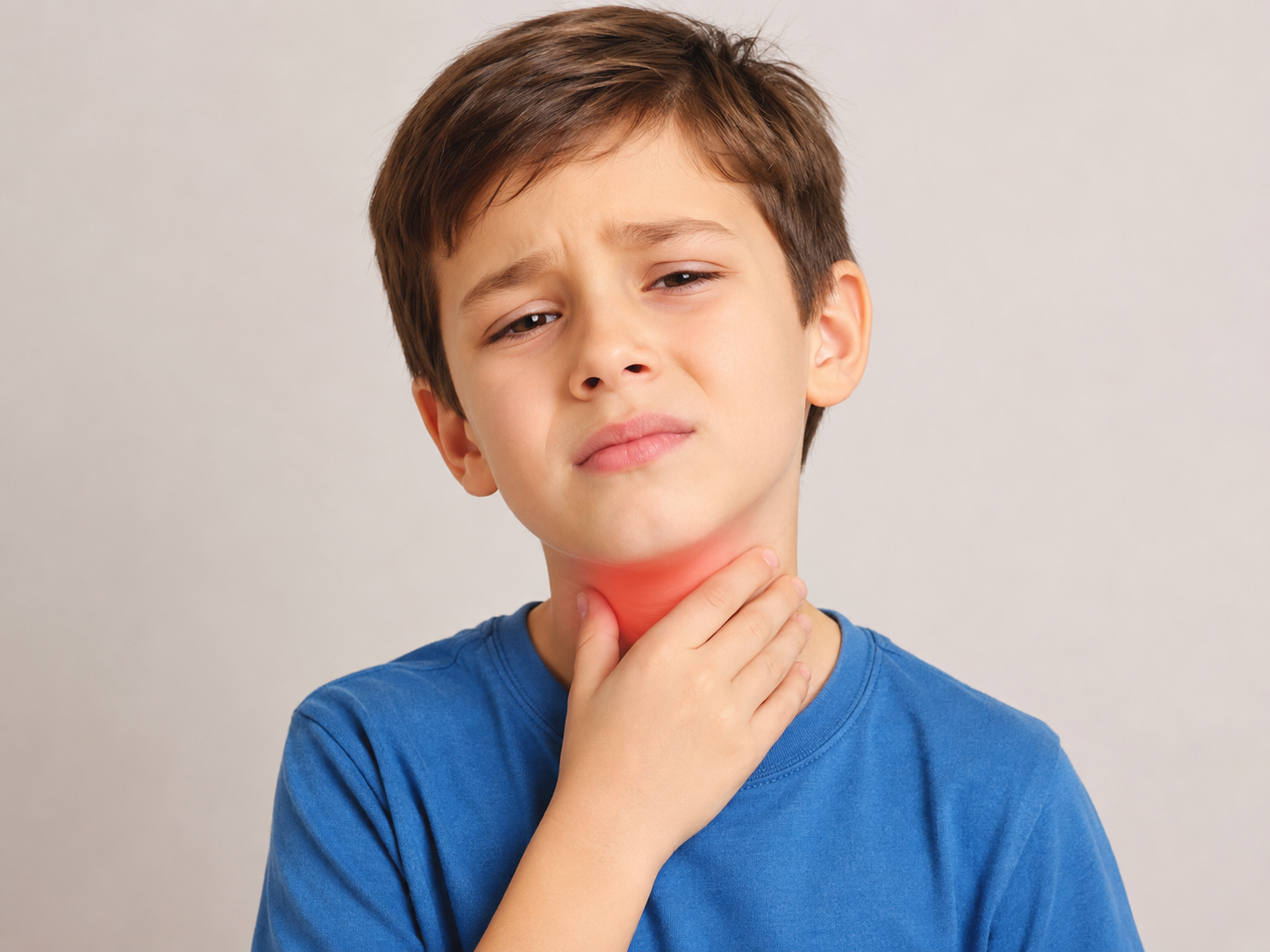
Does Your Child’s Sore Throat Need Antibiotics?
When your child wakes up complaining that it hurts to swallow, it is natural to wonder whether they need antibiotics. However, not every sore throat is strep throat—and giving antibiotics for the wrong kind of infection will not help.
The most important distinction is whether the sore throat is caused by a virus or by group A Streptococcus bacteria, commonly called strep.
Most Childhood Sore Throats Are Viral
Viruses are a common cause of sore throats in children. Because respiratory viruses can affect the nose, throat and airways, children often experience several symptoms at the same time.
A viral sore throat may occur alongside:
- A runny or stuffy nose
- Coughing
- Sneezing
- Hoarseness
- Red or watery eyes
- Congestion
- Mild fever or fatigue
When a child has a sore throat together with a cough and runny nose, a viral infection is usually more likely than strep throat.
Antibiotics do not treat viruses. They will not eliminate a viral sore throat or make a typical cold disappear faster.
What Makes Strep Throat Different?
Strep throat is a bacterial infection. It often causes symptoms that begin suddenly and are centered primarily in the throat.
Signs that may raise concern for strep include:
- Sudden throat pain
- Painful swallowing
- Fever
- Red or swollen tonsils
- White patches or streaks on the tonsils
- Tender or swollen glands in the neck
- Headache
- Stomach pain, nausea or vomiting
- A fine, sandpaper-like rash
Strep throat usually does not cause a cough, runny nose, hoarseness or red eyes. A child with a sore throat, fever and swollen glands—but no cough or runny nose—should be evaluated for possible strep.
Can You Diagnose Strep by Looking at the Throat?
Not reliably.
White or yellow patches on the tonsils can occur with strep throat, but other infections can produce a similar appearance. Symptoms and throat appearance may suggest strep, but a healthcare professional generally confirms the diagnosis with a throat swab.
Two common tests are:
Rapid strep test
A healthcare professional swabs the throat, and results may be available within minutes.
Throat culture
A throat culture takes longer but can occasionally detect infections missed by a rapid test. Children and teenagers may receive a throat culture after a negative rapid test when strep is still suspected.
Testing helps make sure antibiotics are prescribed only when they are likely to help.
When Are Antibiotics Appropriate?
Antibiotics are appropriate when testing confirms that group A strep bacteria are causing the sore throat.
Treatment can:
- Help the child feel better sooner
- Reduce how long the child is contagious
- Limit the spread of the infection
- Reduce the risk of certain complications
Parents should give the medication exactly as prescribed and should not use leftover antibiotics from an earlier illness. The correct medication and dose depend on the child’s age, weight, allergies and medical history.
What Can You Do for a Viral Sore Throat?
Although antibiotics will not help a virus, parents can still take steps to make their child more comfortable.
Helpful measures may include:
- Offering plenty of fluids
- Providing warm liquids or cold treats
- Using a cool-mist humidifier
- Encouraging rest
- Giving age-appropriate pain or fever medicine as directed
- Offering honey to children older than 1 year
Never give honey to a baby younger than 12 months. Parents should also check medication labels carefully to avoid accidentally giving more than one product containing the same ingredient.
When Should Your Child See a Doctor?
Contact a healthcare professional when your child has:
- A sudden or severe sore throat
- Fever with no cough or runny nose
- White patches on the tonsils
- Tender, swollen glands
- A sore throat that is worsening
- A rash that feels like sandpaper
- Symptoms that are not improving
- Repeated episodes of suspected strep throat
Seek urgent care when a child has trouble breathing, cannot swallow liquids or saliva, is drooling because swallowing is difficult, shows signs of serious dehydration, develops major neck swelling or becomes unusually sleepy or difficult to wake.
The Bottom Line
A sore throat with coughing, congestion and a runny nose is more likely to be viral. A sudden sore throat with fever, swollen glands and no cough may be strep.
These signs are helpful clues, but they are not a substitute for testing. Before starting antibiotics, have your child evaluated and tested when strep throat is suspected.
Watch the video:
https://www.youtube.com/watch?v=mFURtb3HzvQ
This article is for educational purposes and should not replace advice, diagnosis or treatment from a qualified healthcare professional.