
Petechiae and Strep Throat: Red Spots on the Roof of the Mouth
Tiny red dots on the roof of the mouth have a medical name: petechiae (say "puh-TEE-kee-eye"). The CDC lists them among the common signs of strep throat, so it's natural to worry when you spot them in a mirror. But red spots on their own can't tell you whether you have strep. Other infections, and even a bout of vomiting, can cause them too.
This page is educational and is not a diagnosis.
Table of Contents
What petechiae look like
Petechiae are pinpoint-sized spots of bleeding under the skin or the lining of the mouth. They come from tiny broken blood vessels (capillaries). According to Cleveland Clinic, they:
- Are red, purple or brown dots, each about the size of a pinpoint
- Are flat, not raised or bumpy
- Don't itch or hurt
- Stay the same color when you press on them (on the skin, a rash usually turns paler when pressed; petechiae don't)
With strep throat, petechiae show up on the roof of the mouth (the palate). Doctors call them palatal petechiae and look for them during a throat exam.
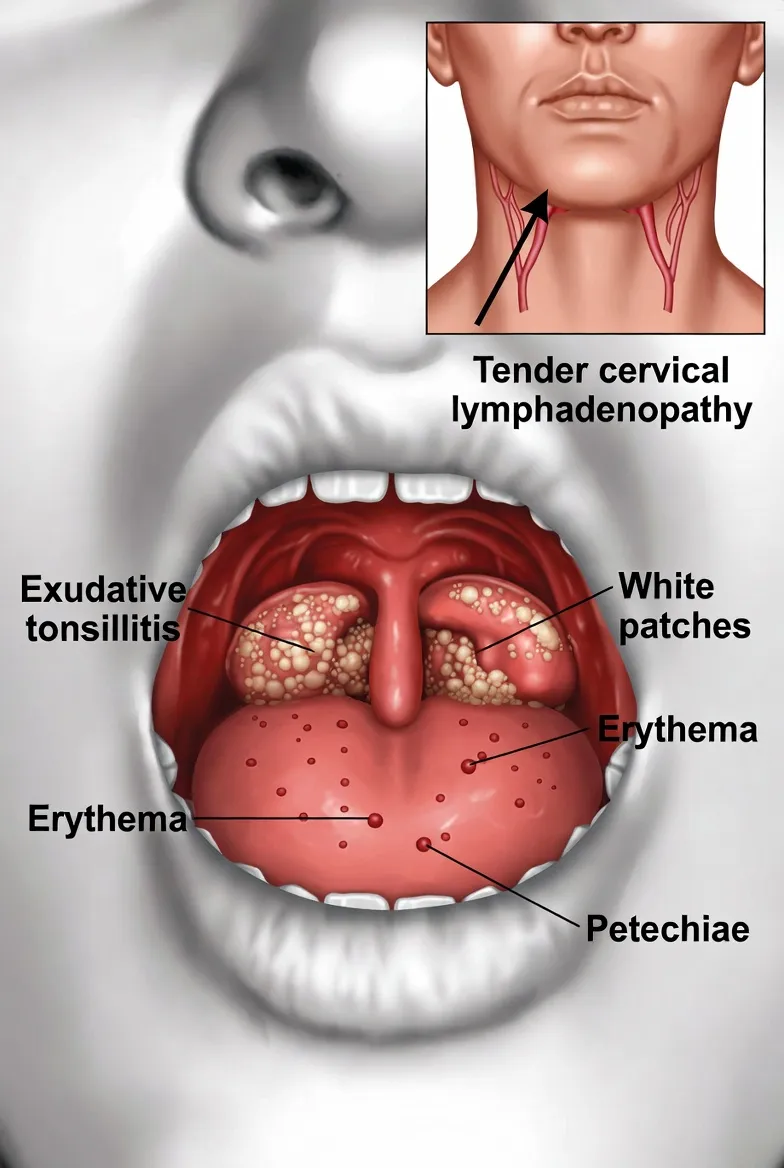
Are red spots on the roof of the mouth a sign of strep?
They can be. The CDC lists these as common symptoms of strep throat:
- A sore throat that starts very quickly and may look red
- Pain when swallowing
- Fever
- Red and swollen tonsils
- White patches or streaks of pus on the tonsils
- Tiny red spots on the roof of the mouth (petechiae)
Still, Cleveland Clinic notes that how your throat looks can't tell you for sure whether you have strep. The CDC agrees: without clear signs of a virus, clinicians can't tell a viral sore throat from strep by examining the throat. A test is the only way to confirm it.
| Points toward strep | Points toward a virus |
|---|---|
| Sore throat that starts suddenly | Cough |
| Fever | Runny nose |
| Red, swollen tonsils, sometimes with white patches | Hoarse voice |
| Tiny red spots on the roof of the mouth | Pink eye (conjunctivitis) |
| No cough or runny nose | Mouth ulcers (sores) |
Other causes of petechiae
Strep isn't the only reason petechiae appear. Cleveland Clinic lists many causes, including:
- Other infections: viral infections such as cytomegalovirus, and mononucleosis (mono). See strep vs mono.
- Scarlet fever: strep throat with scarlet fever can cause petechiae. See scarlet fever and strep throat.
- Straining: hard vomiting or heavy lifting can break tiny blood vessels.
- Medicines: certain antibiotics, antidepressants and blood thinners.
- Low platelets (thrombocytopenia): platelets help blood clot, so low levels can cause spots and easy bruising.
- Injury or friction: damage to the skin or the lining of the mouth.
- Less common, more serious conditions: heart valve infection (endocarditis), Rocky Mountain spotted fever, leukemia, inflamed blood vessels (vasculitis) and vitamin C deficiency.
When petechiae need urgent care
Petechiae can be a sign of a serious illness, especially in children. Cleveland Clinic advises getting medical attention right away if pinpoint red dots on the skin come with any of these:
- Fever
- Spots that spread quickly
- Trouble breathing
- Confusion, dizziness or loss of consciousness
If you or your child has unexplained petechiae, call your healthcare provider.
How strep throat is confirmed
If you have red spots on the roof of your mouth along with a sore throat, a clinician can test for strep:
- Rapid strep test: a throat swab with results in minutes.
- Throat culture: a swab sent to a lab. The CDC calls it the gold standard, and it follows up a negative rapid test in children over age 3.
If the test confirms strep, the CDC recommends antibiotics, with penicillin or amoxicillin as the first choice. Learn more in our strep throat test guide.
What to do if you see red spots in your throat
- With a sudden sore throat or fever, and no cough or runny nose: contact a healthcare provider about a strep test. You can also start with our strep throat self-evaluation.
- With cough, runny nose or hoarseness: a virus is more likely. Rest, fluids and symptom relief usually help, but call a provider if you're worried or symptoms get worse.
- On the skin with a fever, or spreading: get medical care right away.
- With trouble breathing or swallowing, or drooling: this is an emergency. See when strep throat becomes an emergency.
Common questions
Do red spots on the roof of my mouth mean I definitely have strep?
No. Petechiae are a common strep sign, but other infections, straining from vomiting and some medicines can cause them too. Only a strep test can confirm strep throat.
Can you have strep throat without petechiae?
Yes. The CDC describes petechiae as one of several common symptoms. Not everyone with strep has every symptom, which is why testing matters.
Are petechiae contagious?
The spots themselves aren't. But the infection behind them can be. Strep throat spreads easily until it has been treated; see is strep throat contagious?.
Related guides
- Strep throat symptoms
- What strep throat looks like
- Strep vs viral sore throat
- Strep throat without white patches
- Strep vs mono
Medical sources
- Centers for Disease Control and Prevention (CDC): About Strep Throat
- CDC: Clinical Guidance for Group A Streptococcal Pharyngitis
- Cleveland Clinic: Petechiae
- Cleveland Clinic: Strep Throat
This information is for education only and does not replace advice from a qualified healthcare provider.